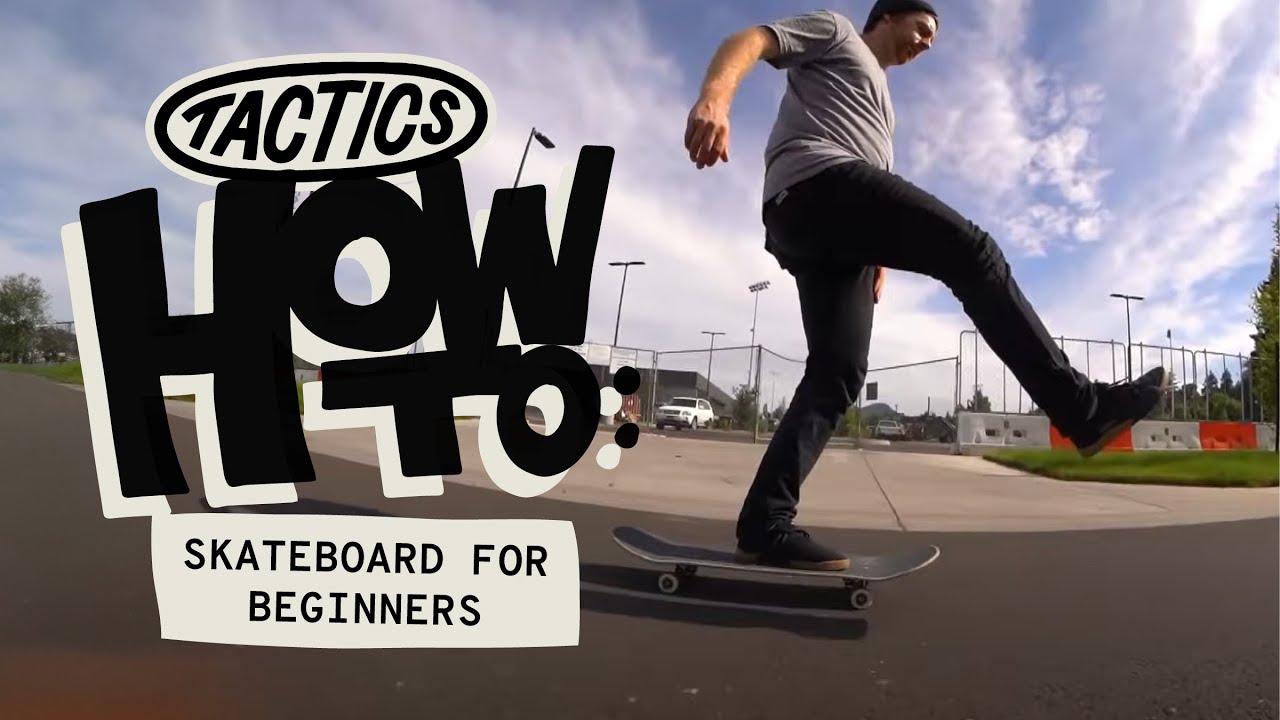
How to Skateboard for Beginners | Footing, Pushing, Stopping, Turning, Cracks & Curbs | Tactics

Before you learn any trick, you need to be comfortable just standing on your board and moving around. This video from Tactics walks through the real fundamentals — the stuff that every other trick is built on top of. If you rush past this stage, everything that comes later will feel harder than it needs to.
Who This Video Helps
This one is for you if you just got your first board and aren’t sure where to start. It’s also worth watching if you skated a little as a kid and want to get back into it without picking up bad habits. If pushing still feels awkward or you tense up when you see a crack in the sidewalk, this video covers exactly that.
What To Watch Closely
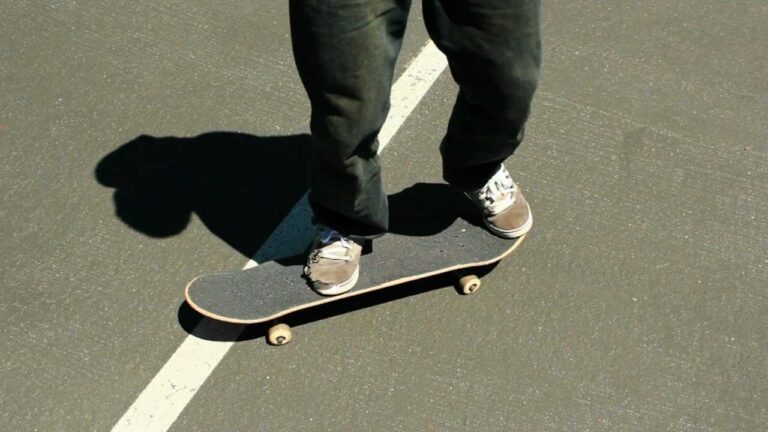
- Foot placement when pushing. Pay attention to where the front foot sits on the board — slightly behind the bolts, angled forward. A lot of beginners point their front foot sideways too early, which makes pushing unstable. The video shows the natural angle that keeps you balanced while your back foot is on the ground.
- How they shift weight for turns. Turning on a skateboard is about leaning, not steering. Watch how the rider’s shoulders and hips move together. The board follows your body weight — once you understand that, turning stops feeling like a guessing game.
- The approach to cracks and curbs. Notice the slight knee bend and weight shift right before hitting an obstacle. This is the part most people skip, but it’s what keeps you from getting thrown off by a pebble or a sidewalk gap.
Common Mistakes
- Looking down at your feet while riding. It’s natural to want to watch your board, but it kills your balance. Your body follows your eyes — when you look down, your weight tips forward and you lose stability. Try to keep your gaze a few feet ahead of you instead of at the nose of your board.
- Pushing with your front foot. Some beginners instinctively push with the foot that’s closer to the nose. This is called “mongo” pushing, and while it’s not the end of the world, it puts you in a weaker position for everything that comes next. If this is what feels natural to you, it’s worth retraining early.
Try This Drill
Find a flat, smooth surface — a parking lot or tennis court works great. Practice pushing three times, then placing both feet on the board and just riding until you slow down naturally. Don’t try to stop or turn yet. Just get used to the feeling of rolling with your knees slightly bent and your weight centered. Do this ten times. By the end, your body will start to relax on the board, and that’s when real progress begins.
Dojo Note
At Trick Dojo, we think of these basics as your operating system — everything else is just an app that runs on top. A wobbly push or stiff legs will follow you into kickflips and grinds if you don’t sort them out here. There’s no shame in spending a few sessions just cruising. The skaters who progress fastest are usually the ones who got comfortable riding before they started learning tricks.
What To Learn Next
Once pushing and riding feel second nature, a good next step is learning to push with more control and speed. From there, the Lv1 — Flat Basics section on Trick Dojo will guide you into manuals, tic-tacs, and your first real board control drills.
Channel: Trick Dojo
Published: 2026-02-09T01:50:10Z
Playlist: TD Lv0 — Foundations
Notes:
–