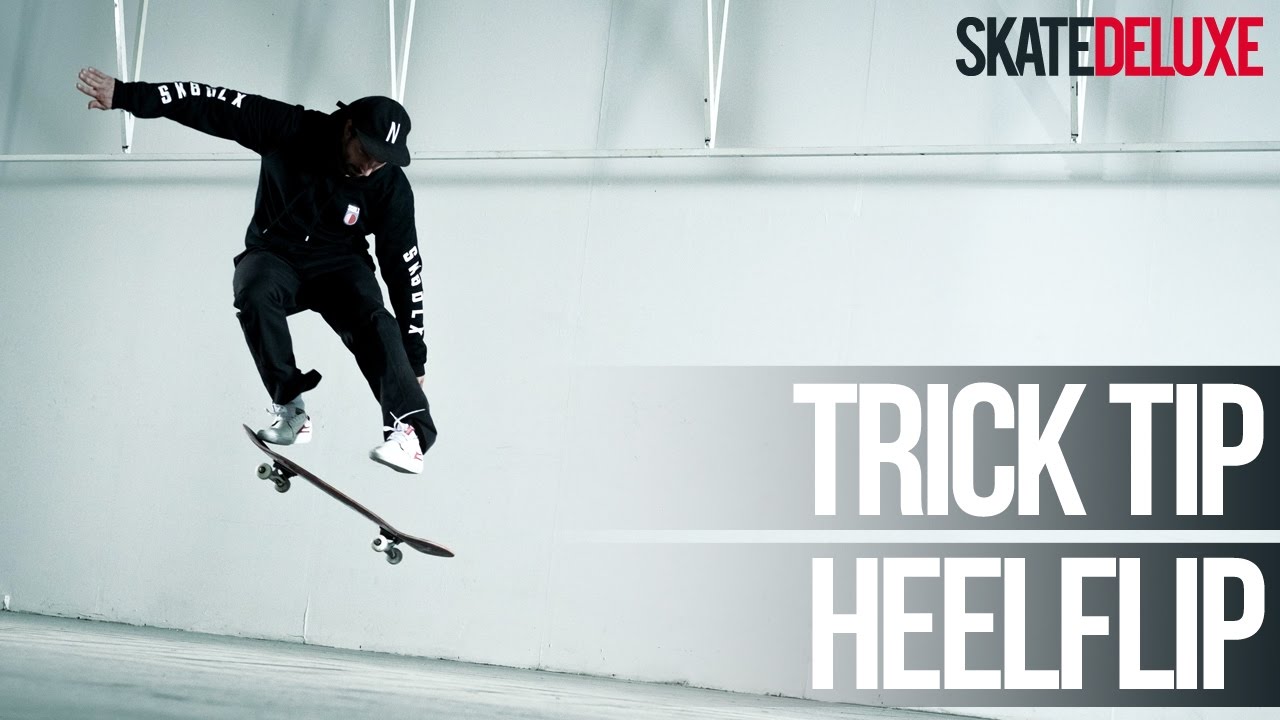
How to Heelflip | Skateboard Trick Tip | skatedeluxe

Channel: Trick Dojo
Published: 2026-02-09T02:03:48Z
Playlist: TD Lv2 — Flat Progression
Notes:
–
Tailslides are slides where the tail of the board locks on the obstacle and slides perpendicular. It looks similar to a boardslide but with the tail as your focus point. Once you understand boardslides, tailslides are just a weight shift and angle adjustment.
Who This Video Helps
You’ve landed boardslides and want to learn slide variations. Tailslides feel more locked and stable than boardslides because the tail acts as an anchor point. This is for skaters building complete obstacle skills.
What To Watch Closely
- Tail Lock And Angle. The tail actually makes contact with the obstacle and acts as a pivot point. It’s not just sliding like a boardslide—there’s a lock component. Watch how the tail catches and holds.
- Weight Distribution. Weight is more toward the back of the board, which keeps the tail locked during the slide. The back foot is engaged and active.
- Body Angle During The Slide. The rider leans back slightly, keeping tension on the tail. This isn’t aggressive—it’s purposeful balance.
Common Mistakes
- Sliding Without Locking The Tail. If it feels like a boardslide, the tail isn’t locked. Engage the tail and let it be your anchor point.
- Leaning Back Too Much. This will cause you to slip off or lose control. The lean is present but not exaggerated.
Try This Drill
Practice boardslides until they’re solid. Then attempt tailslides by shifting your weight back slightly and focusing on locking the tail. The approach and initial motion are similar—the difference is weight position and lock engagement.
Dojo Note
Tailslides are interesting because they’re the bridge between slides and grinds. You’re using a truck-adjacent part of the board (the tail) as your contact point, but you’re sliding instead of grinding. This teaches you that skateboarding isn’t binary—tricks exist on a spectrum. Something can have grind characteristics and slide characteristics at the same time.
What To Learn Next
Once tailslides feel locked, explore noseslides (front tail equivalent) and bluntslides. You’re mastering the slide family of tricks now.