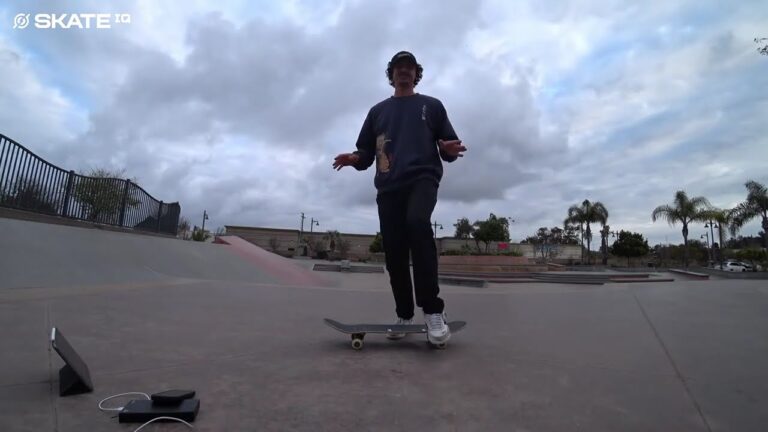
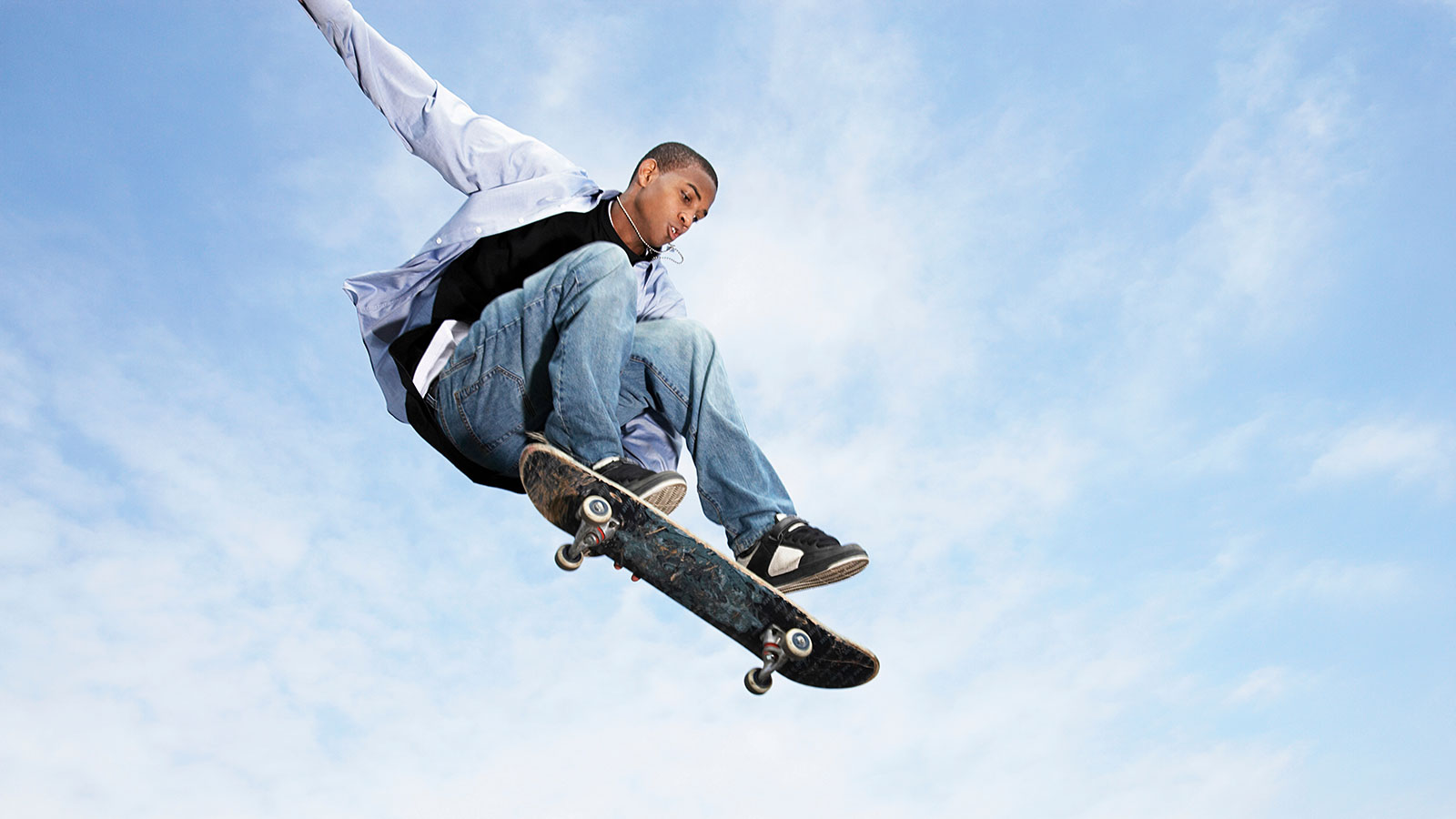
The Real Frontside 180: Turn With Your Shoulders, Not Against Your Board
Most skaters approach the frontside 180 as a spinning problem.
They think about how to turn their body. They push harder, spin faster, jump with more commitment. And then the trick either gets landed by luck or falls apart in the same way it always has.
The frontside 180 is not a spinning problem. It is a sequencing problem.
The rotation works when the body moves in the right order. The shoulders lead. The hips follow. The board follows the hips. When that chain runs cleanly, the trick feels controlled and repeatable. When it is out of order, nothing saves it.
This lesson is about understanding that sequence well enough to build it on purpose.
What the Frontside 180 Really Is
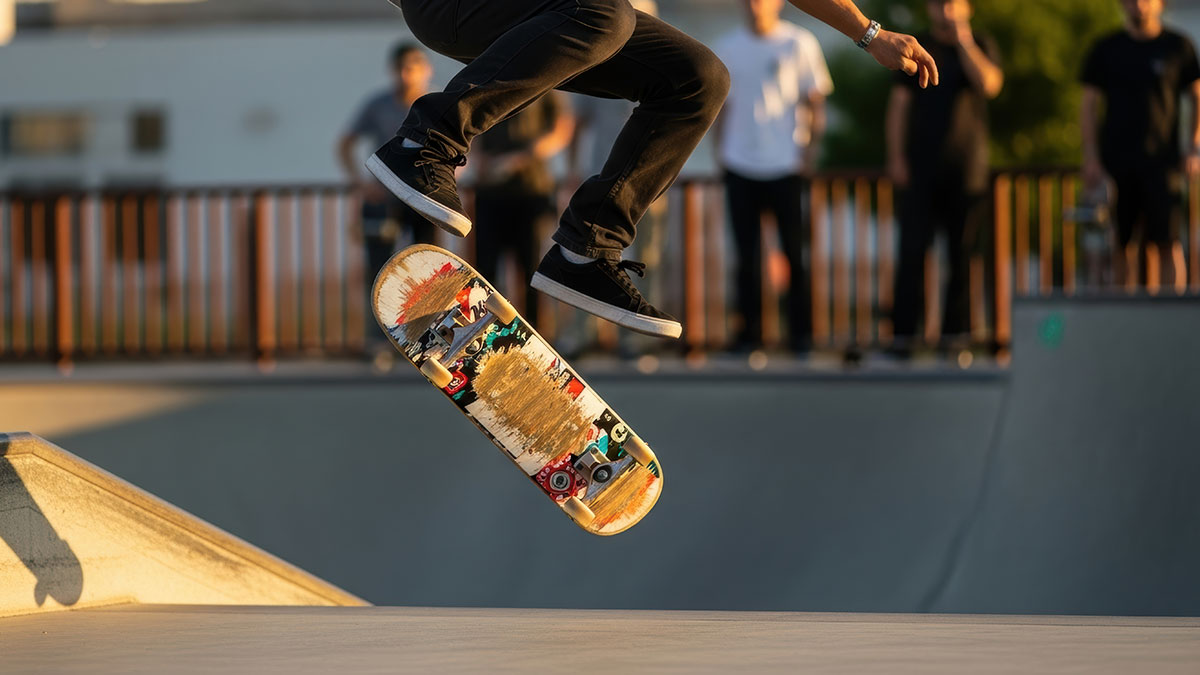
The frontside 180 is a rotational trick where your body and board turn 180 degrees in the frontside direction. For a regular stance skater, that means turning left. For a goofy skater, turning right.
But that description tells you what the trick looks like, not what makes it work.
The frontside 180 is a controlled transfer of rotational energy from your shoulders, through your hips and legs, and into the board. The trick does not spin because you jump and twist randomly. It spins because the rotation starts from a clear point in the upper body and travels down in a logical sequence.
This is why the frontside 180 often looks calm in the hands of experienced skaters. The body has learned to initiate rotation cleanly before the feet leave the ground. The result is a trick that looks more like a smooth turn than a desperate spin.
Setup: Where the Rotation Begins Before the Pop
A strong frontside 180 starts with pre-wind. This means your upper body begins to rotate slightly in the opposite direction before the trick fires. That small wind-back stores the rotational intention. Without it, the body has nowhere to rotate from.
Your feet should be close to an ollie-style setup, possibly with the front foot positioned slightly more central or angled depending on your style. The back foot sits on the tail with enough stability to pop cleanly. Neither foot needs to change dramatically from a standard ollie position.
Your shoulders are the most important part of setup. Before you pop, they should be lightly wound back in the backside direction. This does not mean a dramatic twist. Even a small wind creates a source for the rotation that follows.
Balanced weight and a stable spine keep the pre-wind organized. A setup that feels tense or chaotic will produce a rotation that is hard to predict.
The Hidden Mechanics Behind the Frontside 180
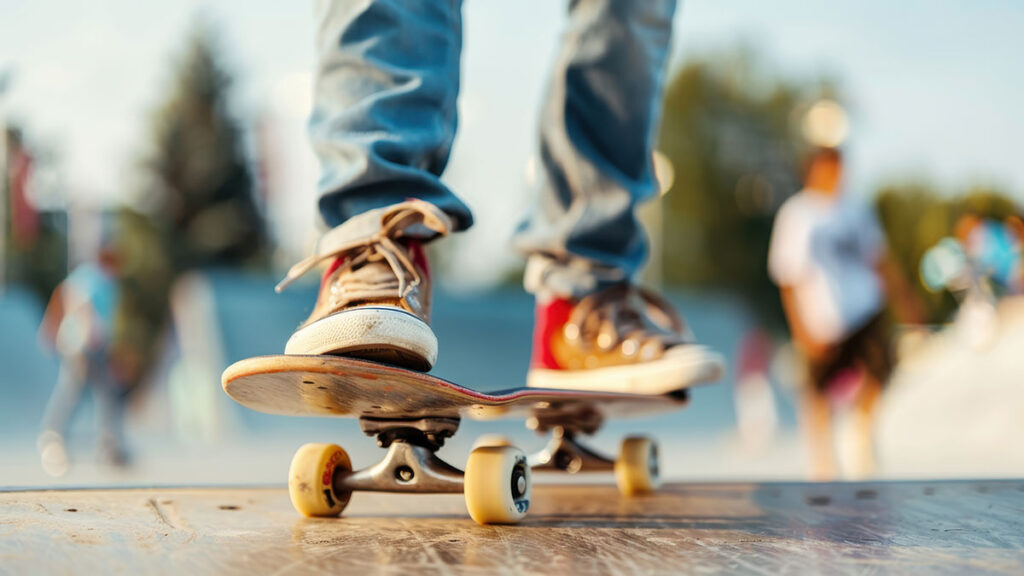
Every clean frontside 180 depends on four things: initiation, transfer, commitment, and landing stance.
1. Initiation
The rotation begins in the upper body. Specifically, the shoulders. If the shoulders initiate cleanly, the hips, legs, and board follow in a natural chain. If the shoulders are passive, every other part of the body must overwork to complete the trick. Initiation is not force. It is direction given at the right moment.
2. Transfer
The rotational energy moves from shoulders to hips to feet and into the board. This transfer must happen in sequence, not all at once. When everything fires at the same time, the trick becomes chaotic. When the transfer is clean, the board rotates because the body has already organized the turn above it.
3. Commitment
The frontside 180 requires you to turn past the point where you can easily correct your position. Many skaters stop rotating too early and land at 90 or 135 degrees. This is not a lack of courage. It is usually a timing issue. The commitment must be built into the initiation, not added at the last moment.
4. Landing Stance
The frontside 180 lands fakie. That means your back foot becomes your front foot after the rotation. Many skaters know this but do not prepare for it. If the body rotates cleanly and the landing stance is anticipated, the fakie landing feels natural. If the stance is a surprise, the landing falls apart regardless of how good the rotation was.
The frontside 180 is cleaner when all four of these elements are understood before the attempt begins, not discovered during the fall.
Step by Step: How the Trick Actually Happens
Step 1: Wind Back the Shoulders
Before the pop, your shoulders rotate slightly in the backside direction. This does not need to be a large movement. Even a subtle wind creates a source of rotational energy. The trick starts here, not at the pop.
Step 2: Load and Pop
You compress and strike the tail with your back foot. The pop must be clean and upward, not angled away from your line. A pop that sends the board sideways will cause the trick to drift off its intended path. The pop is the launch, not the spin.
Step 3: Unwind the Shoulders Into the Rotation
As you rise from the pop, your shoulders release the wind and rotate frontside. This unwinding is what drives the rest of the rotation. It should feel like letting something go, not forcing something to happen. The hips and legs follow the shoulders, not the other way around.
Step 4: Let the Board Rotate With the Body
The board follows the hips. It does not need to be kicked or scooped into rotation. When the body turns cleanly, the board is pulled along. If you try to manually spin the board instead of letting the body drive it, the trick loses its fluency.
Step 5: Commit to the Full 180
Do not stop at 90 degrees. Do not stop at 135. Trust the rotation you started and let it complete. This is where many skaters need to practice separately, training the feeling of going all the way instead of hesitating halfway.
Step 6: Absorb the Fakie Landing
As the board comes back under you, prepare for the fakie stance. Bend your knees to absorb impact, keep your shoulders organized, and look where you are going in fakie. A soft, structured landing proves that the rotation was complete and organized before the wheels touched the ground.
What You Should Feel
A clean frontside 180 should feel like the board follows your body, not like you are pulling the board along with effort.
You should feel a wind-back in your upper body before the pop. You should feel the pop travel straight up rather than off to the side. You should feel the shoulders releasing into the rotation and the hips following naturally. You should feel the board catching up with the body rather than being forced into place.
The landing should feel like arrival, not emergency.
If the trick feels like a desperate spin where everything leaves your control at once, the sequencing is still out of order. If it feels like a chain of clear events that builds toward a stable landing, the understanding is growing.
Common Lies About the Frontside 180
Lie #1: “Just spin harder.”
More force applied to a bad sequence still produces a bad trick. More force applied to a clear sequence produces a better trick. Speed and force are earned by fixing the order, not the other way around.
Lie #2: “Your shoulders should stay square.”
Some advice tells beginners to keep the upper body still and use only the legs. This often creates a trick where the body stops at 90 degrees and the board finishes alone. The shoulders must lead. They just should not overshoot.
Lie #3: “You need to kick the board around.”
No. If the body rotation is organized, the board follows without being kicked. Kicking introduces extra variables that make the trick harder to repeat, not easier.
Lie #4: “Landing fakie is the hard part.”
For most people, the rotation is the hard part. The fakie landing becomes manageable once the full 180 is completed cleanly. Blaming the landing often means the rotation itself was never fully understood.
Why Repetition Often Fails
The frontside 180 is a trick that many skaters practice constantly without improving, because they are repeating the feeling of a partial rotation and hoping it becomes a full one.
Ten attempts where the shoulders stop at 90 degrees teach nothing useful. They teach the body to stop short. The improvement comes when the session has a clear emphasis. Maybe today you are only training the pre-wind. Maybe today you are only training the commitment past 135 degrees. Maybe today you are only training the fakie landing after a clean rotation.
One emphasis per session. That is how repetition builds the trick instead of rehearsing its failure.
Master Drills
Drill 1: Practice the Wind and Unwind Without a Board
Stand still and practice the pre-wind and shoulder rotation without a skateboard. Feel the sequence of shoulder initiation leading into hip rotation. The body should understand the chain before the board is involved.
Drill 2: Small Rolling Frontside 180s
At slow speed, practice the trick with less emphasis on height. The goal is a clean, full 180-degree rotation. A small, complete rotation teaches more than a large, partial one.
Drill 3: Commit Past 135
Set a mental line. Every attempt, your only goal is to rotate past 135 degrees before the board lands. Not a clean landing. Not a perfect catch. Just commitment past that point. Training commitment separately unlocks the rest of the trick faster than training everything at once.
Drill 4: Film the Rotation From Behind
Film yourself from behind and study where the shoulders stop. If they stop before the full rotation, that is the problem. If they overshoot and cause drift, that is a different problem. The camera reveals what the feeling hides.
Build the Correct Mental Image
Before the body learns the trick, the mind must stop picturing it as a jump with a spin attached.
Picture the chain instead. Wind, pop, unwind, transfer, board follows, land fakie. Picture your shoulders leading the rotation with intention and your hips traveling behind them. Picture the board following the body cleanly, not being forced into a position.
Picture the landing not as something to survive, but as the natural result of a complete rotation. A fakie landing that feels stable is proof that the rotation was clean. If the image in your head ends with the rotation, the landing will always feel like an accident.
Include the landing in the mental image. Every time.
Final Lesson
The frontside 180 does not reward spinning. It rewards sequencing.
When the shoulders lead cleanly, the rest of the body follows. When the body follows cleanly, the board follows the body. When the board follows cleanly, the fakie landing becomes predictable. That is the whole trick. Not force. Not speed. Sequence.
Understand the chain. Build the image. Repeat with purpose.
That is how the frontside 180 stops feeling like a lucky spin and starts feeling like a controlled turn.