
The Real Ollie: How the Board Rises When Your Body Stops Fighting It
Most skaters do not fail the ollie because they lack courage.
They fail because they misunderstand what the ollie is.
The ollie is not just a jump. It is not just a pop. It is not just a front-foot drag. It is a sequence of pressure, release, lift, and control. When that sequence is misunderstood, practice becomes random. When that sequence becomes clear, repetition starts to work.
This lesson is not about chasing a lucky make. It is about understanding the logic of the movement so deeply that your body can begin to repeat it on purpose.
What the Ollie Really Is
At a surface level, the ollie looks simple: crouch, pop, slide, jump, land. That explanation is common, but it is too shallow to solve real problems.
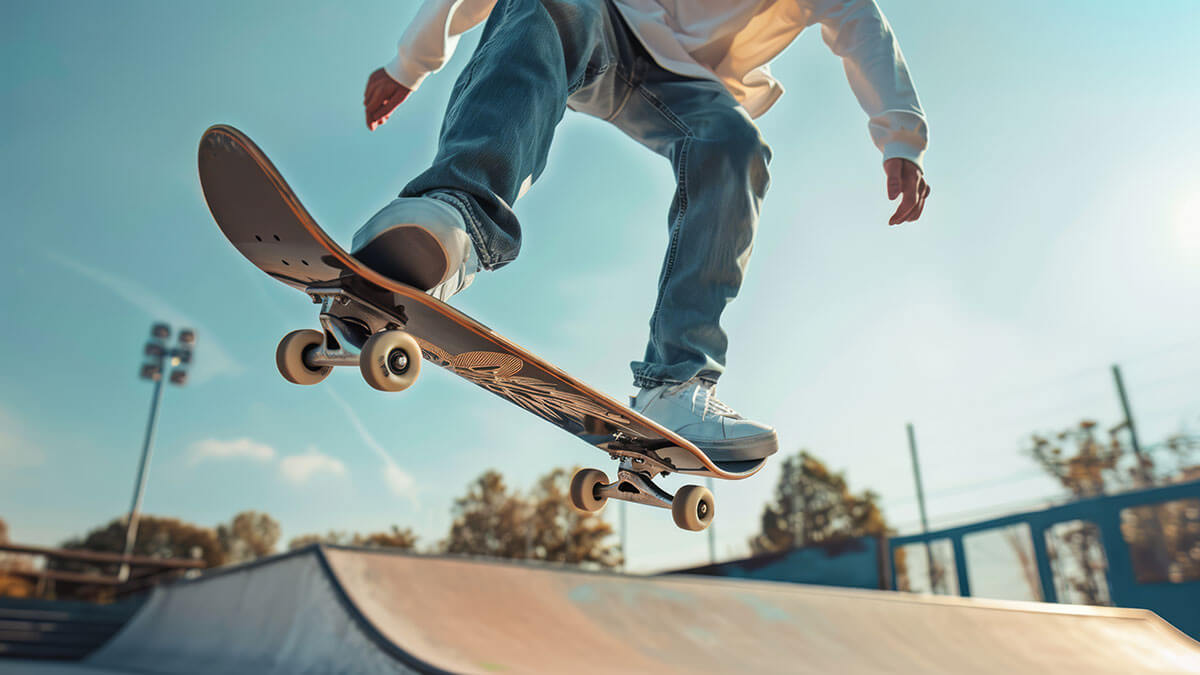
The ollie is a controlled rise of the board created by timing your body and the board together. The tail strikes the ground, the board begins to rebound, your body rises, your front foot guides the board upward, and your back foot follows instead of pinning the board down.
That means the ollie is not a violent act of forcing the board into the air. It is a coordinated release. The board rises because you stop trapping it. It rises because your body creates the right conditions for the board to move.
This is why strong skaters make the ollie look calm. They are not fighting the board. They are allowing the board to respond to precise movement.
Setup: Where the Trick Begins
Your ollie begins long before the tail hits the ground. It begins with your stance, your balance, and your intention.
Your front foot should usually sit around the middle of the board or slightly behind it, depending on your style and the height you want. Your back foot should be placed on the tail with enough contact to pop cleanly, but not so much that your foot becomes heavy and slow.
Your weight should feel centered, not leaning too far over the tail and not dumped excessively over the nose. If your balance begins in the wrong place, the rest of the trick becomes a rescue mission.
A good setup should feel ready, not tense. You are preparing direction, not storing panic.
The Hidden Mechanics Behind the Ollie
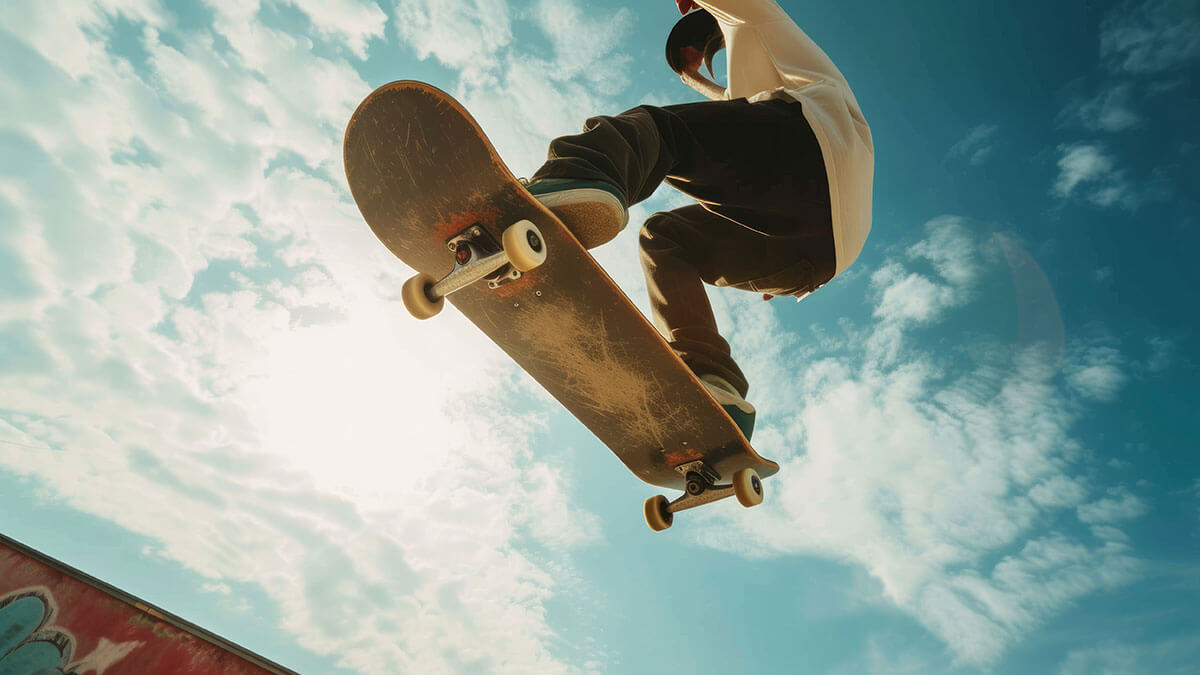
Every clean ollie depends on four things: pressure, timing, balance, and release.
1. Pressure
The trick starts with downward pressure into the board. This does not mean collapsing carelessly. It means loading your body so that force can be sent through the tail at the correct moment. The pressure should feel organized and vertical, not wild and backward.
2. Timing
Most bad ollies are timing problems disguised as strength problems. Some skaters pop before their body is ready to rise. Some jump before the tail can do its work. Some rush the front foot and kill the board before it can climb. Timing decides whether the movement becomes shape or chaos.
3. Balance
Your upper body must stay connected to the board. If your shoulders swing wildly, if your chest falls too far forward, or if your hips drift away from the deck, the ollie loses structure. Balance is not passive. It is active calm.
4. Release
This is the part many skaters never fully understand. The board cannot rise well if your body is still pinning it down. Your back foot must pop and then get out of the board’s way. Your front foot must guide the board, not smother it. Release is what turns effort into motion.
The ollie becomes powerful not when you do more, but when you do the right things in the right order.
Step by Step: How the Ollie Actually Happens
Step 1: Load
You bend your knees and compress your body, but the purpose is not to crouch low for the sake of crouching low. The purpose is to prepare an efficient upward movement. A deep crouch with no control only creates delay. A clean load stores direction.
Step 2: Pop
Your back foot sends the tail into the ground with sharp intent. This is not a lazy stomp. It is a precise strike. The pop creates the board’s first upward reaction, but the pop alone does not complete the ollie.
Step 3: Rise
As the tail hits, your body must already be rising. This is where many skaters fall apart. They either stay too heavy over the board or separate from it too early. The goal is to rise with the movement, not before it and not after it.
Step 4: Guide the Front Foot
The front foot does not magically lift the whole board by scraping harder. Its real job is to guide the board upward and forward once the board has already begun to rise. The front foot helps shape the ollie. It does not create the entire trick alone.
Step 5: Bring the Back Foot Up
This is one of the most overlooked details in skateboarding. Many low ollies are not caused by a weak front foot. They are caused by a slow back foot. If the back foot stays low, the tail stays low. If the back foot rises cleanly, the board can level out.
Step 6: Level the Board
The ollie becomes usable when the board levels beneath you. This does not happen because you force the nose down. It happens because the board has room to rise and both feet stay connected to its path. A level board is a sign of coordinated feet, not panic correction.
Step 7: Land With Structure
Landing should feel like receiving the board, not crashing onto it. Your knees absorb impact, your shoulders stay organized, and your eyes stay forward. A stable landing proves that the movement before it made sense.
What You Should Feel
A useful trick image is not only visual. It is physical.
You should feel a moment where the board becomes light. You should feel that the tail snaps and the board reacts, not that you are dragging dead weight through the air. You should feel your upper body staying quieter than your lower body. You should feel the front foot guiding and the back foot freeing the board instead of pinning it down.
If the ollie feels like a desperate jump with a board attached to it, something is still out of order.
If the ollie feels like a coordinated rise where the board follows the logic of your movement, you are getting closer.
Common Lies About the Ollie
Lie #1: “Just jump higher.”
Jumping higher without fixing the sequence often makes the ollie worse. More height does not fix bad timing.
Lie #2: “Just drag your front foot harder.”
Excessive scraping often creates tension and kills the board’s natural rise. The front foot should guide, not bully.
Lie #3: “You just need to commit.”
Commitment matters, but commitment to the wrong movement only builds stronger mistakes. Clarity must come first.
Lie #4: “The back foot only pops.”
No. The back foot also must leave. A clean ollie requires release after the pop. Many skaters understand the hit but not the escape.
Why Repetition Often Fails
Repetition is not magic. Repetition only works when the body is repeating something worth learning.
Ten rushed ollies do not automatically produce improvement. They often produce ten rehearsals of the same confusion. Real progress comes when one session has one emphasis. Maybe today you are training a cleaner pop. Maybe today you are training a faster back-foot rise. Maybe today you are only training balance over the center of the board.
Clear repetitions teach. Blind repetitions merely exhaust.
Master Drills
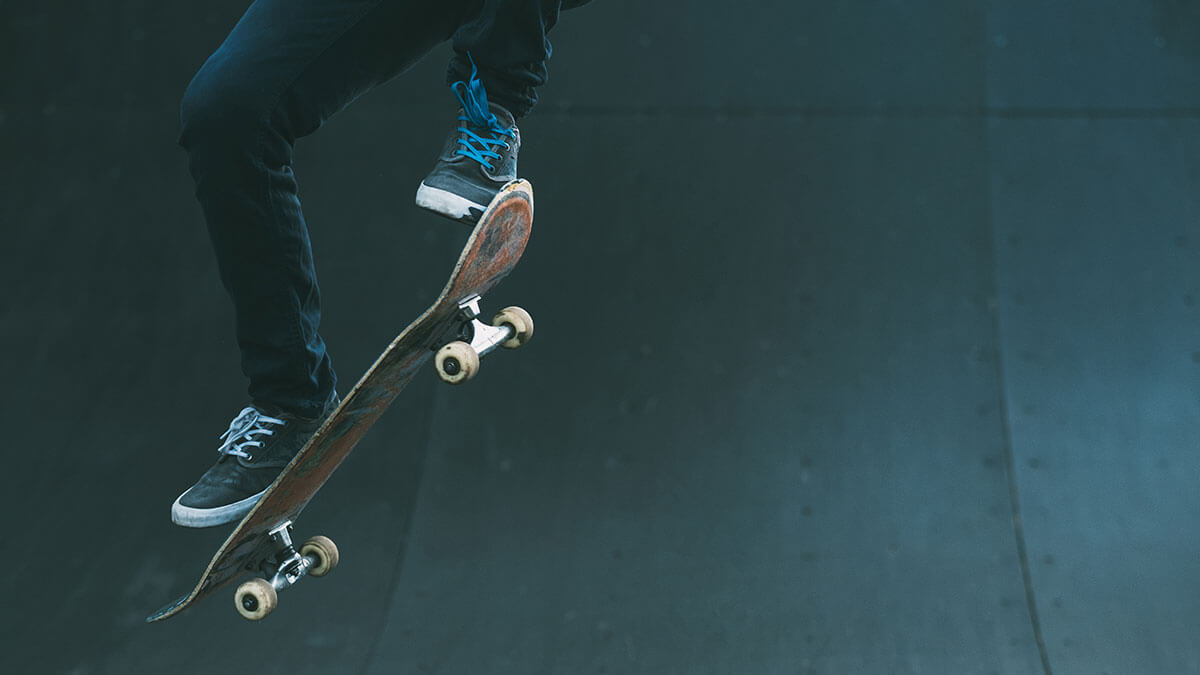
Drill 1: Pop Without Chasing Height
Stand still or roll very slowly. Focus only on a clean tail strike and immediate body rise. Do not worry about making the ollie high. Build order before you chase amplitude.
Drill 2: Front-Foot Guidance at Small Scale
Practice very small ollies where your only goal is to feel the board rise and level smoothly. Small, clean ollies reveal more truth than large, ugly ones.
Drill 3: Back-Foot Awareness
Film yourself and watch your back foot. If it hangs low, your ollie will stay trapped. Train the feeling of popping and lifting, not popping and lingering.
Drill 4: Over a Line, Not Over a Big Obstacle
Use a crack, chalk line, or very small marker on the ground. The goal is not fear. The goal is shape. A small target teaches timing better than a big obstacle too early.
Build the Correct Mental Image
Before the body learns a trick, the mind must stop picturing it the wrong way.
Do not imagine smashing the tail and desperately dragging the front foot. Imagine a cleaner chain of events: load, strike, rise, guide, level, receive. Imagine your shoulders staying calm. Imagine the board responding to clear instructions instead of chaos.
A strong mental image reduces wasted motion before your feet even move. This matters more than most skaters realize.
Final Lesson
The ollie does not reward force. It rewards clarity.
When the sequence is wrong, the board feels stubborn. When the sequence is right, the board begins to feel lighter, calmer, and more obedient.
Understand the movement. Build the image. Repeat with purpose.
That is how the ollie stops being a mystery.